Learn why live khutbah translation matters for multilingual congregations, foreign workers, youth in the diaspora, and mosques that want the khutbah’s message to reach everyone.
“Live khutbah translation doesn’t change Jumu’ah — it helps its message reach the people who came to hear it.”
In brief
Live khutbah translation enables multilingual congregations so everyone present can understand the Jumu’ah message. Learn why it matters for modern mosques and Islamic centers.
Help congregants understand the khutbah
If there are people in your mosque who don’t understand the language of the khutbah, MinbarLive can help them follow the message in real time, in a language they understand. Simple QR access and live translation make the khutbah more accessible to everyone.
It’s Friday. People slowly enter the mosque, look for a place in the row, and settle down before Jumu’ah begins. On the surface, everything feels familiar. The same space, the same adhan, the same silence before the khutbah. But if we look more closely, we’ll notice that many congregations have changed over the last few years.
In the rows, it’s no longer only people who speak the same language. There are older community members, youth born in the diaspora, students, travelers, foreign workers, and people who have only recently moved to the city. Some understand the language the imam speaks. Some understand only part of it. And some, although they sincerely want to listen, understand almost nothing.
This is one of the biggest quiet realities in today’s congregations: people are present, but the message of the khutbah does not fully reach them.
That’s exactly why live khutbah translation is becoming increasingly important for modern mosques and Islamic centers.
The congregation is changing, and so are the community’s needs
Mosques have always been places of gathering. In them, people meet, get to know one another, seek advice, learn, and feel a sense of belonging. But today’s congregations—especially in European cities and the diaspora—are increasingly multilingual.
In one mosque, people may gather from Bosnia and Herzegovina, Croatia, Turkey, Arab countries, Albania, Pakistan, Indonesia, Malaysia, Africa, and other parts of the world. Some have been there for years. Some arrived a few months ago. Some will stay, and some are only there temporarily. But on Fridays, they are connected by the same need: to perform Jumu’ah and be part of the community.
The problem arises when the language of the khutbah becomes a barrier. A person can stand in the row, pray with others, and be physically present—but if they don’t understand the khutbah, they miss an important part of Jumu’ah. Not because they don’t want to listen, but because the language stands in the way.
Communities that recognize this show they understand the reality they live in. The congregation may no longer be unified by language, but it can remain unified by message.
A khutbah is not just a speech before the prayer
To understand why khutbah translation matters, we need to remind ourselves what a khutbah actually is. The khutbah is not a formal introduction to the Jumu’ah prayer. It’s not just a few words said before the fard. It is a reminder, advice, and a message to the community. Through the khutbah, the imam speaks about faith, morality, responsibility, family, trials, togetherness, one’s relationship with Allah, and one’s relationship with people.
In the khutbah, Qur’anic verses, hadiths, examples from life, practical guidance, and topics important to a specific congregation are often mentioned. Sometimes the khutbah calms a person. Sometimes it wakes them up. Sometimes it helps them look differently at a problem they carry within.
But for the khutbah to have that impact, a person must understand it. If they don’t understand the language, they hear a voice but don’t receive the message. They see the community around them, but remain separated from the meaning being conveyed. That is not a small thing—especially for people who are far from their family, their country, and their familiar surroundings. Jumu’ah may be one of the few moments in the week when they feel spiritually connected.
That’s why the language question is not just a technical issue. It’s a question of care for people.
What happens when part of the congregation doesn’t understand the khutbah?
At first glance, it may seem like the problem isn’t big. People came, they prayed, Jumu’ah was performed. But from the perspective of someone who doesn’t understand the khutbah, the experience is different. Imagine a foreign worker who recently arrived in Croatia. All week they work, adapt to a new environment, maybe don’t know many people, and still struggle with the language. On Fridays, they come to the mosque because they want to feel belonging and perform Jumu’ah. They sit and listen to the khutbah, but understand only a word here and there. After some time, attention drops—not because they don’t care, but because they can’t follow.
Or imagine a young man born in the diaspora. At home, he heard his parents’ language, but doesn’t understand it deeply enough. At school, at work, and in daily life, he uses the language of the country where he lives. When he comes to the mosque, he wants to be part of the community, but the khutbah often sounds distant to him—not because of the content, but because of the language.
Such situations are not always visible from the outside. People won’t necessarily say they don’t understand. They won’t complain. They may continue coming. They may, over time, come less often. And the community won’t always know why. Live khutbah translation helps reduce that quiet distance.
How does live khutbah translation change the Jumu’ah experience?
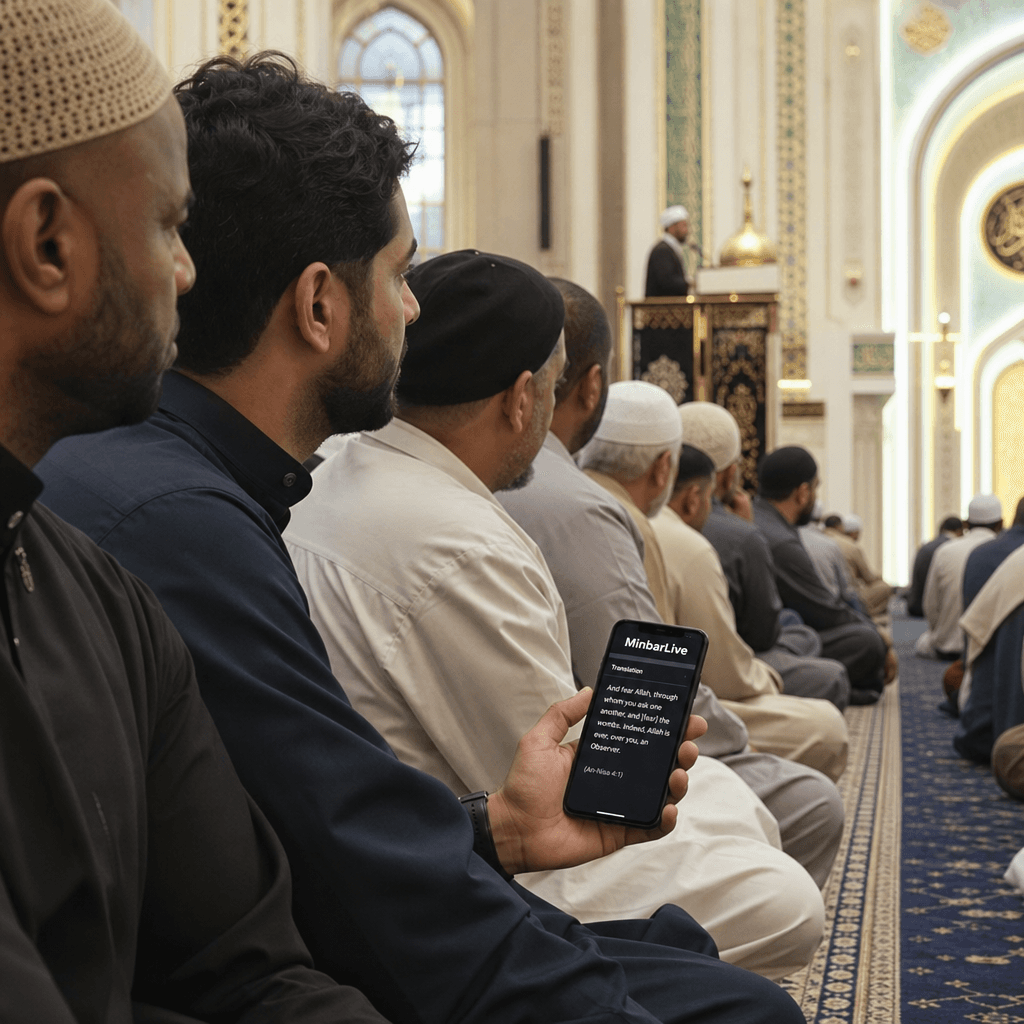
Live khutbah translation enables congregants to follow the message of the khutbah in real time, in a language they understand. That means the translation isn’t waited for after Jumu’ah, isn’t sent later, and isn’t reduced to a short summary. The message arrives while the khutbah is happening.
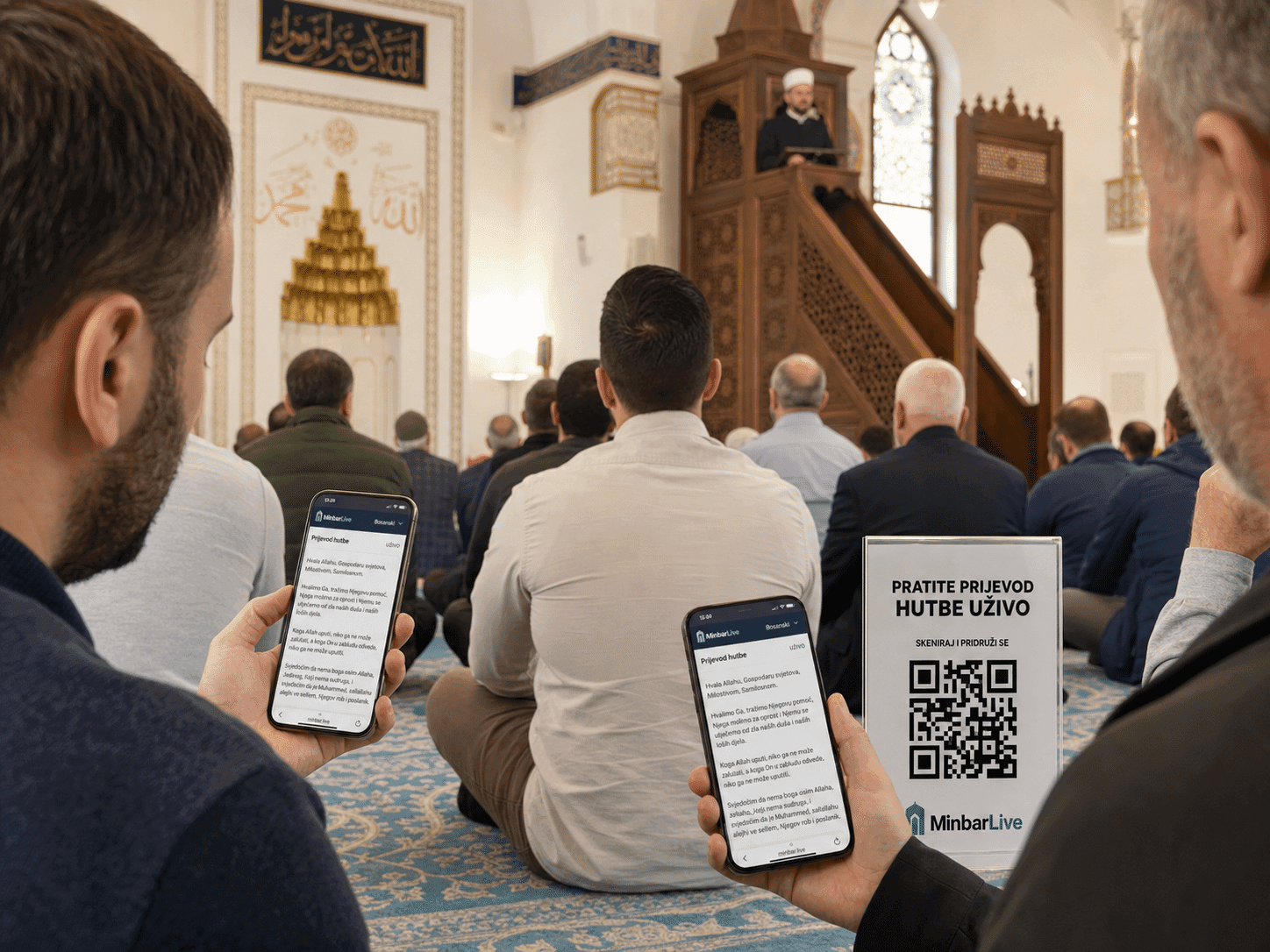
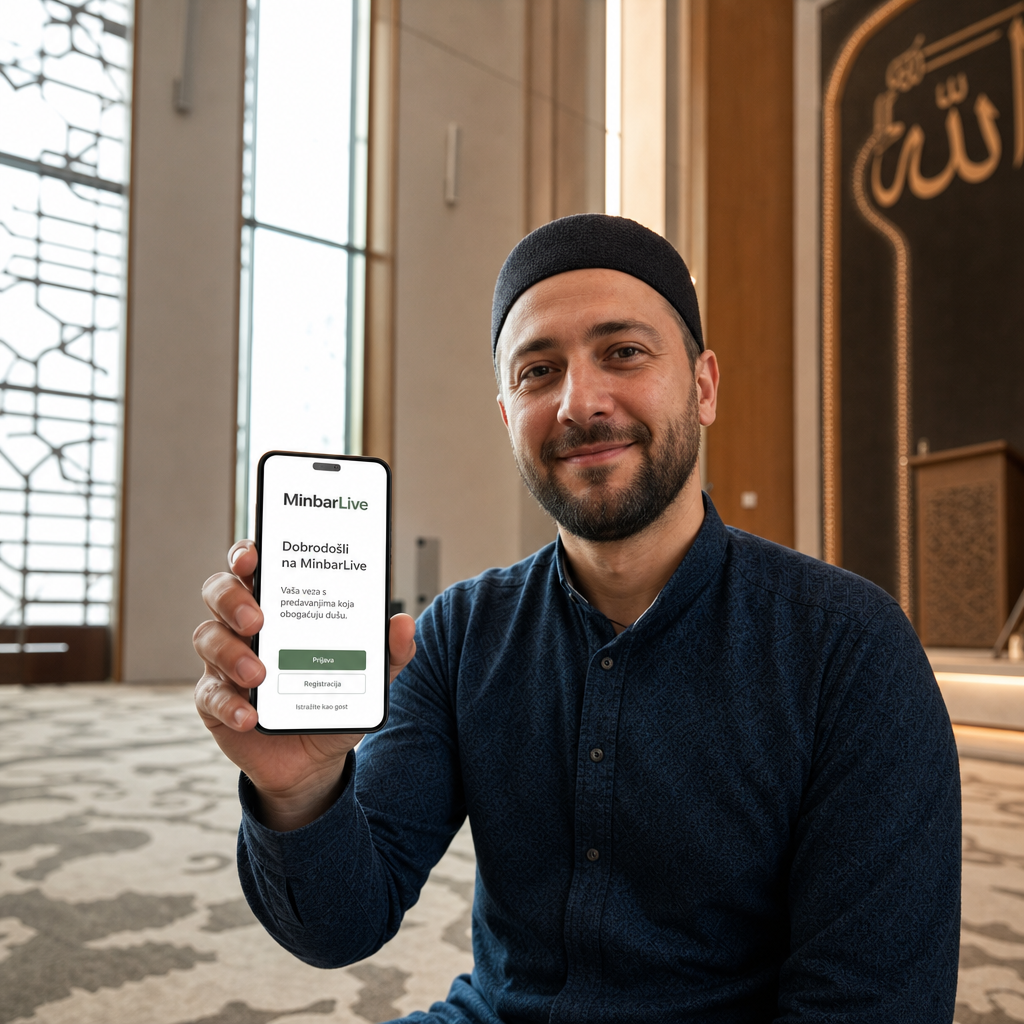
In practice, this can look very simple. The mosque places a QR code at the entrance, on a notice board, or on a screen. A congregant scans the code, opens the link, chooses their language, and follows the translation on their phone. The imam continues speaking as usual. Jumu’ah doesn’t change. There’s no additional noise, no special device, and no need to install an app.
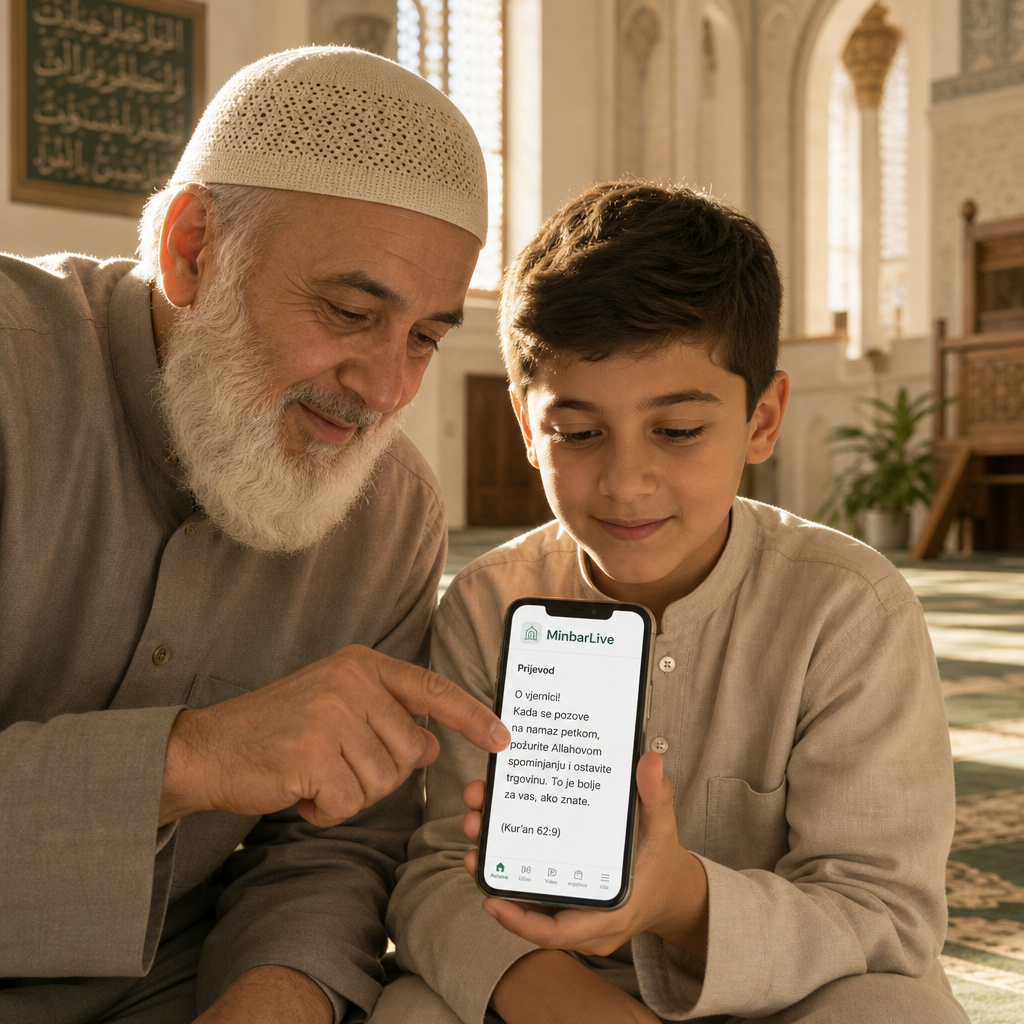
The change happens in the listener’s experience. Instead of sitting and trying to guess the meaning, they can now follow the flow of the khutbah. When the imam mentions advice, they understand it. When a verse or hadith is cited, they can follow the context. When a topic connected to everyday life is discussed, the message reaches them directly.
It’s a small change in approach, but a big change in the feeling of belonging.
Particularly important for congregations in Europe and the diaspora
In many European countries, mosques have lived a multilingual reality for years. In Germany, Austria, Switzerland, France, Croatia, Slovenia, Italy, Scandinavia, and other countries, congregations often bring together people of different backgrounds and different languages.
Sometimes the challenge is how to include foreign workers. Sometimes it’s how to bring the khutbah closer to young people who better understand the language of the country where they were born. Sometimes it’s how to connect the older and younger generation. And sometimes it’s how to open the door to people who are new to the community and still don’t know the local language. In such circumstances, live khutbah translation is not a luxury. It can become an important part of hospitality and care for the congregation. A mosque that thinks about the languages of its members sends a strong message: we see you, it matters to us that you understand, and we want you to be part of the community.
Technology as a bridge, not a replacement
When technology in the mosque is discussed, it’s understandable that there are questions and caution. Jumu’ah has its seriousness. The khutbah has its dignity. The mosque is not a place for unnecessary distraction.
That’s why it’s important to emphasize: live khutbah translation should not replace the khutbah, the imam, or the living presence in the mosque. Technology here has only one role—to remove the language barrier. A QR code doesn’t change the khutbah. The phone doesn’t become the center of worship. The translation doesn’t replace the imam’s speech. It only helps a person who doesn’t understand the language follow the message that is already being delivered.
If used carefully and with the right intention, technology can be a bridge. A bridge between languages. A bridge between generations. A bridge between people standing in the same row, but not coming from the same linguistic world.
Why is translation quality especially important for a khutbah?
Translating a khutbah is not the same as translating an ordinary conversation. A khutbah includes Islamic terminology, Arabic expressions, Qur’anic verses, hadiths, and concepts that require a careful approach. Some words carry meanings that cannot always be conveyed literally. For example, terms like sabr, taqwa, niyyah, akhlaq, ummah, or shirk have a deeper context than a single word in another language. If translated superficially, the message can sound strange, imprecise, or even incorrect.
That’s why it’s important for mosques not to use just any translation tool, but a solution tailored to Islamic content. Live khutbah translation must be fast, but also careful enough. It must support understanding, not create additional confusion. That’s where the value of solutions like the MinbarLive platform comes in—developed with a special focus on khutbahs, Islamic terminology, and the needs of multilingual congregations.
Live khutbah translation as part of a broader digital mosque
Live khutbah translation can be the first step toward broader thinking about a digital mosque. When a khutbah is transcribed and translated, it doesn’t have to disappear after it is delivered. It can be saved, edited, archived, and used later. In this way, a mosque can gain more value from a single khutbah. The text can be published on the website, sent to congregants, turned into educational material, or used as the basis for video and podcast content. That way, the message of the khutbah does not remain limited only to those who were physically present that Friday.
Of course, the essence remains the same: Jumu’ah happens in the mosque, among people. But digital tools can help the message last longer and reach further.
Caring about language is caring about people
In the end, the question of live khutbah translation is not only about technology, SEO, digitization, or modernization. At its core, it’s about our relationship to people. When a community notices that part of the congregation doesn’t understand the khutbah and decides to do something, it shows care. It shows it doesn’t see it as “good enough” for people to be merely present rather than truly included. It shows it understands how the congregation is changing and wants to respond to that change in a beautiful and beneficial way.
For someone who has just arrived in a new country, the ability to understand the khutbah in their own language can mean a lot. It can mean they don’t feel lost. It can mean they are noticed. It can mean the mosque is truly their place, not just a space where they stand temporarily.
Conclusion: the khutbah should reach everyone who came to hear it
The mosque is a place of togetherness, but true togetherness requires understanding. If people stand in the same row but do not understand the same message, the community has an opportunity to do something important. Live khutbah translation helps bring the message of Jumu’ah closer to everyone—regardless of language, background, or how long they’ve been in the community. It doesn’t change the essence of the khutbah; it helps its essence reach more people.
In a time when congregations are increasingly diverse, this can be one of the most beautiful and useful changes a mosque can make. Because it’s not enough for people to only hear the khutbah. What matters is that they understand it.
Want to enable live khutbah translation in your mosque?
If there are people in your congregation who don’t understand the language of the khutbah, MinbarLive can help the message reach them in real time. With live transcription, translation into multiple languages, and simple QR access, the khutbah can become more accessible to everyone. Request a demo and see how MinbarLive can help your congregation.
Next step
Help congregants understand the khutbah
If there are people in your mosque who don’t understand the language of the khutbah, MinbarLive can help them follow the message in real time, in a language they understand. Simple QR access and live translation make the khutbah more accessible to everyone.